










Large format printers help organizations bring critical documents and high-impact graphics production in-house. But with so many options available, choosing the right large format printer size can feel overwhelming.
The good news? The best choice isn't necessarily the biggest printer—it's the one that aligns with your applications, media requirements, print volumes and long-term business goals. In this guide, we'll break down the most common large format printer sizes, the types of work they're best suited for and the key factors to consider before making your investment.
When evaluating a large format printer, size impacts far more than the maximum width of your prints. The right large format printer size influences the types of applications you can produce in-house, the media you can use, overall productivity and your long-term operating costs.
A printer that's too small may limit your ability to create posters, banners or oversized technical drawings, forcing you to outsource work and increasing turnaround times. On the other hand, a printer that's larger than your organization needs can consume valuable floor space and increase costs unnecessarily. By matching printer size to your most common applications, print volumes and future growth plans, you can maximize efficiency, improve workflow and make a smarter long-term investment.
Choosing the right large format printer size starts with understanding the types of documents and graphics your organization produces most often.
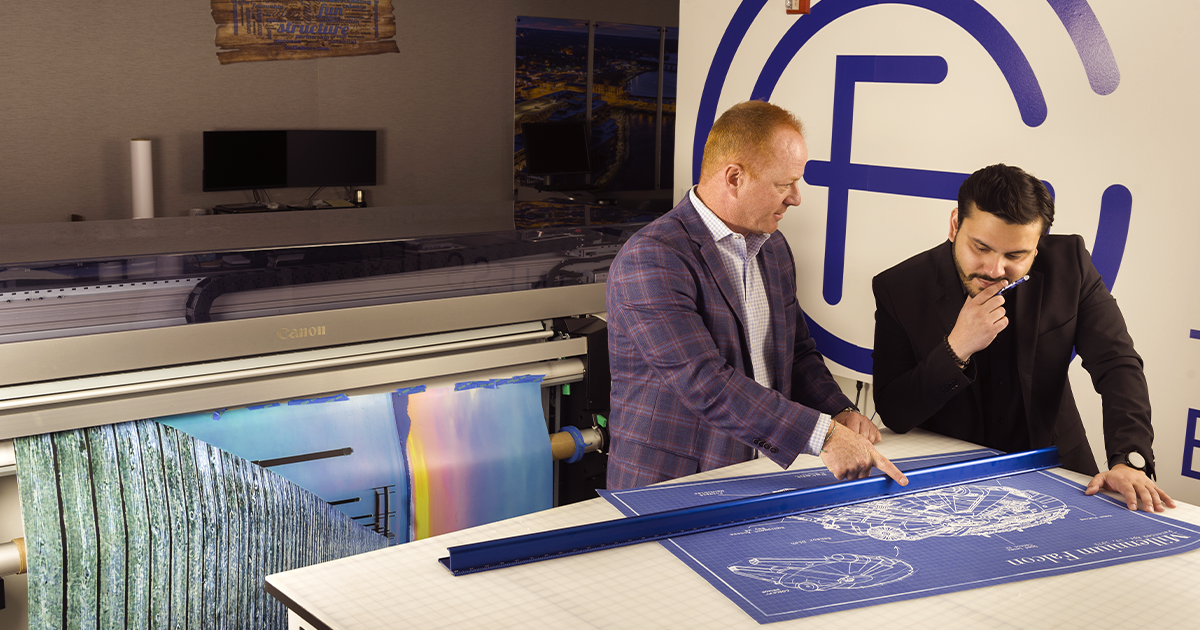
A 24-inch large format printer is an excellent choice for organizations that primarily print CAD drawings, GIS maps, engineering documents, construction plans and educational materials. These printers are designed to deliver precise line accuracy and professional-quality output without requiring a significant amount of floor space.
For many organizations, a 36-inch printer offers the ideal balance of flexibility, productivity and affordability. This size supports a broad range of applications, including technical drawings, presentation graphics, posters, campus signage and facilities planning documents.
Organizations producing larger marketing materials often find that a 44-inch large format printer unlocks new opportunities. The additional print width supports event graphics, retail signage, tradeshow displays and eye-catching posters without requiring jobs to be outsourced.
Wider media options allow marketing teams, universities and in-plant print centers to produce more applications internally, helping reduce outsourcing costs while improving turnaround times and quality control.
When print volume, speed and media versatility become top priorities, organizations should look beyond printer width and evaluate production-class systems.
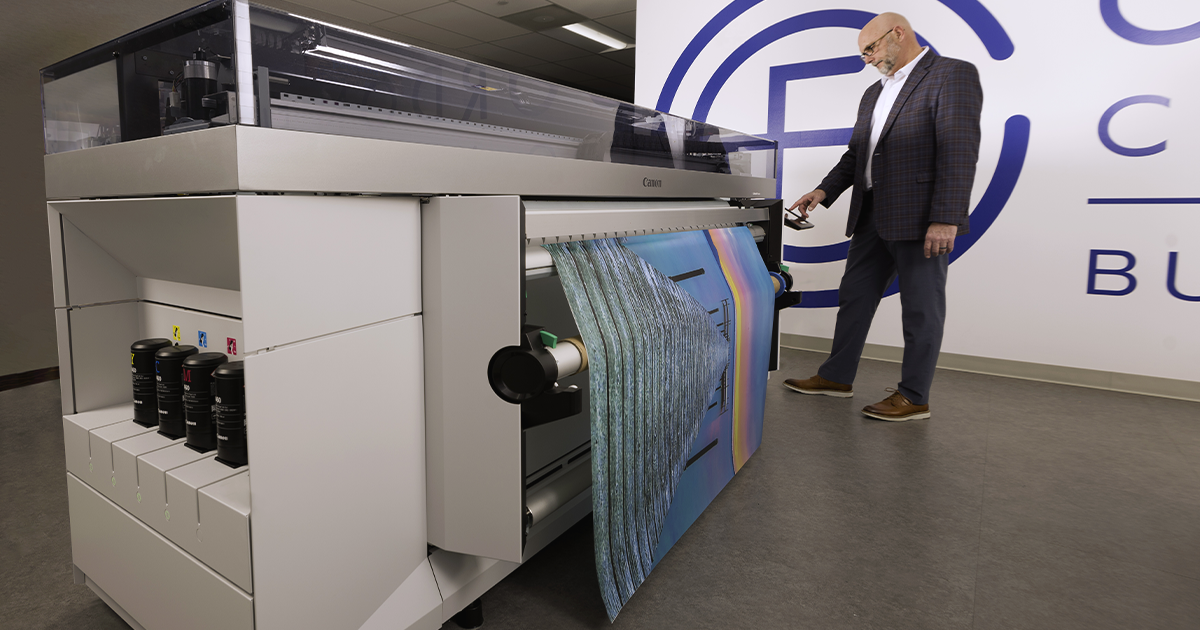
The Canon Colorado Series is built for high-volume roll-to-roll production, delivering exceptional throughput and durable output for signage and graphic applications. For engineering firms and mixed-use environments, the Canon ColorWave Series provides the flexibility to produce both technical documents and vibrant color graphics. Meanwhile, the Canon PlotWave Series is designed for high-volume monochrome and technical printing, making it a popular choice for architectural, engineering and reprographics departments that require streamlined workflows and dependable performance.
Together, these platforms help commercial printers and centralized production facilities increase efficiency while meeting a wide range of customer demands.
Before investing in a large format printer, ask yourself these four key questions:
Answering these questions can help you select a large format printer size that supports both your current needs and long-term business goals.
While selecting the right large format printer size is important, it's only one part of the decision-making process. Organizations should also evaluate features that impact productivity, output quality and long-term value.
Print speed and workflow capabilities can make a significant difference in busy environments. Higher-volume operations may benefit from features such as multi-roll media handling, automated workflows and faster print engines that help keep projects moving.
Print quality is another key consideration. Technical documents require crisp lines and accuracy, while marketing graphics, posters and signage demand vibrant color and high-resolution output.
Many organizations also benefit from multifunction capabilities, including scanning, copying and digital archiving. These features can streamline document management and make it easier to share oversized drawings, plans and graphics across departments.
Finally, consider the printer's total cost of ownership, including supplies, maintenance, service support and expected uptime. Choosing a reliable device backed by experienced service professionals can help minimize disruptions and maximize the return on your investment.
Choosing the right large format printer is about more than selecting a device—it's about partnering with a provider that understands your business goals, applications and workflow requirements. Gordon Flesch Company (GFC) helps organizations evaluate their print needs and identify solutions that align with their current demands while supporting future growth.
As the #1 largest independent Canon dealer and a Ricoh Production ProDealer, GFC provides access to industry-leading technology backed by expert guidance, implementation and ongoing support. Whether you're outfitting a school district print center, an engineering department or a commercial print operation, GFC can help you select a solution that delivers the right combination of size, speed and performance.
Beyond hardware, GFC's comprehensive Managed Print Services (MPS) help organizations optimize their entire print environment. With proactive maintenance, supply management, fleet optimization and ongoing performance monitoring, MPS can reduce costs, improve uptime and allow your staff to focus on more strategic priorities. The result is a large format printing solution that continues to deliver value long after the initial purchase.
The best large format printer size is the one that supports your organization's current needs while positioning you for future growth. By evaluating your applications, media requirements, print volumes and long-term goals, you can invest in a solution that improves productivity, reduces outsourcing costs and delivers lasting value.
Whether you need a compact technical printer, a versatile multifunction system or a high-volume production platform, choosing the right technology partner can make all the difference.
Ready to find the right large format printer for your organization? Contact Gordon Flesch Company today. Our experts will assess your requirements, recommend the best-fit solution and help you maximize performance with industry-leading equipment and comprehensive Managed Print Services.